FisTx Indonesia and the Department of Fisheries (Faculty of Agriculture) at UGM have entered into a strategic partnership to promote technology-based aquaculture innovation
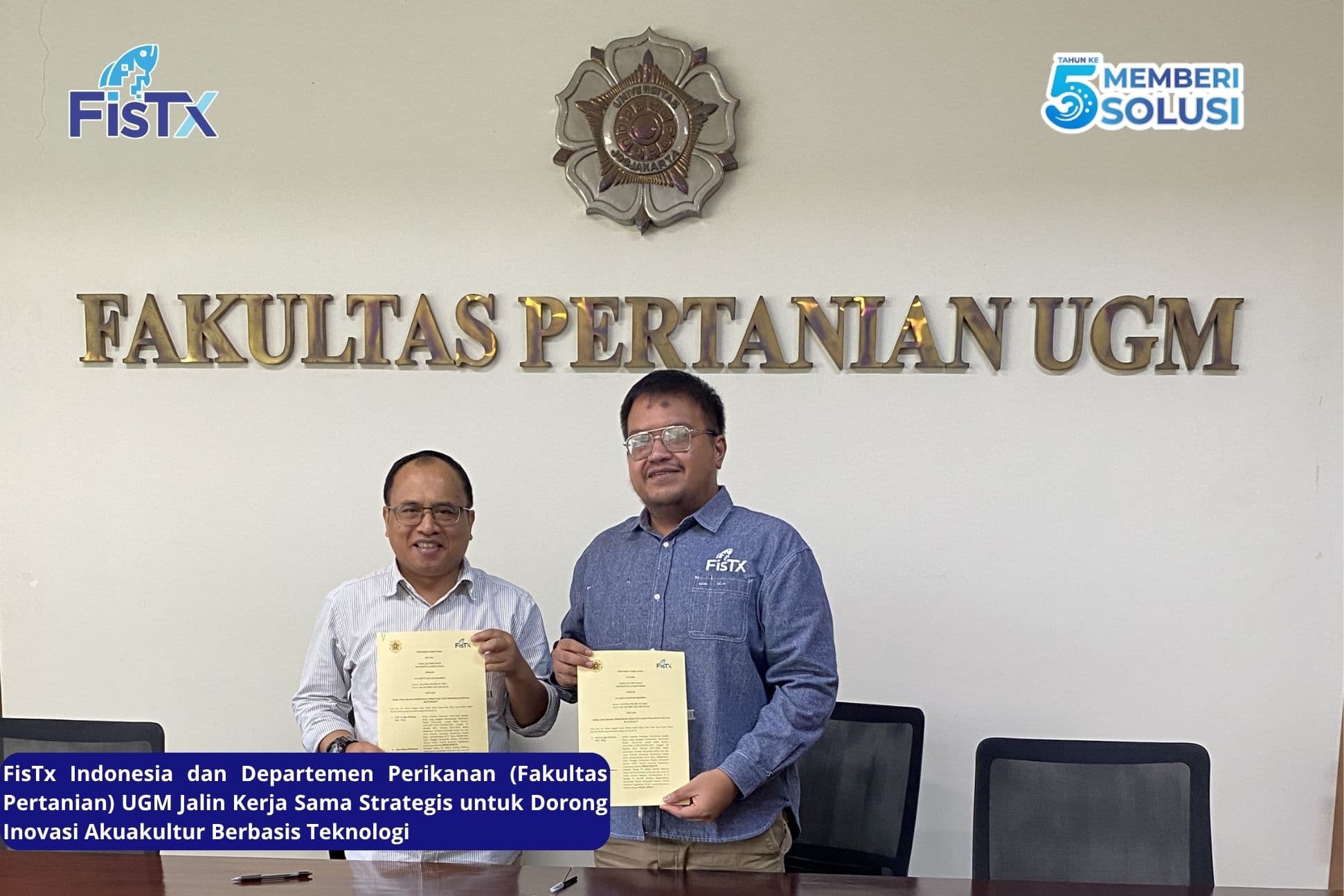
Yogyakarta, 5 May 2026 — FisTx Indonesia has officially entered into a strategic partnership with Gadjah Mada University through the signing of a Memorandum of Understanding (MoU) with the Faculty of Agriculture, specifically the Department of Fisheries. This collaboration represents a concrete step towards promoting research-based technology and innovation for the national aquaculture sector.
The MoU signing took place on Tuesday, 5 May 2026, at the Faculty of Agriculture, UGM, and will run for the next five years. The event was attended by the CEO of FisTx Indonesia, Rico Wisnu Wibisono; the Head of the Department of Fisheries at UGM, Prof. Dr. Ir. Alim Isnansetyo; and the Vice Dean for Research, Community Service and Collaboration, Prof. Subejo, S.P., M.Sc., Ph.D..
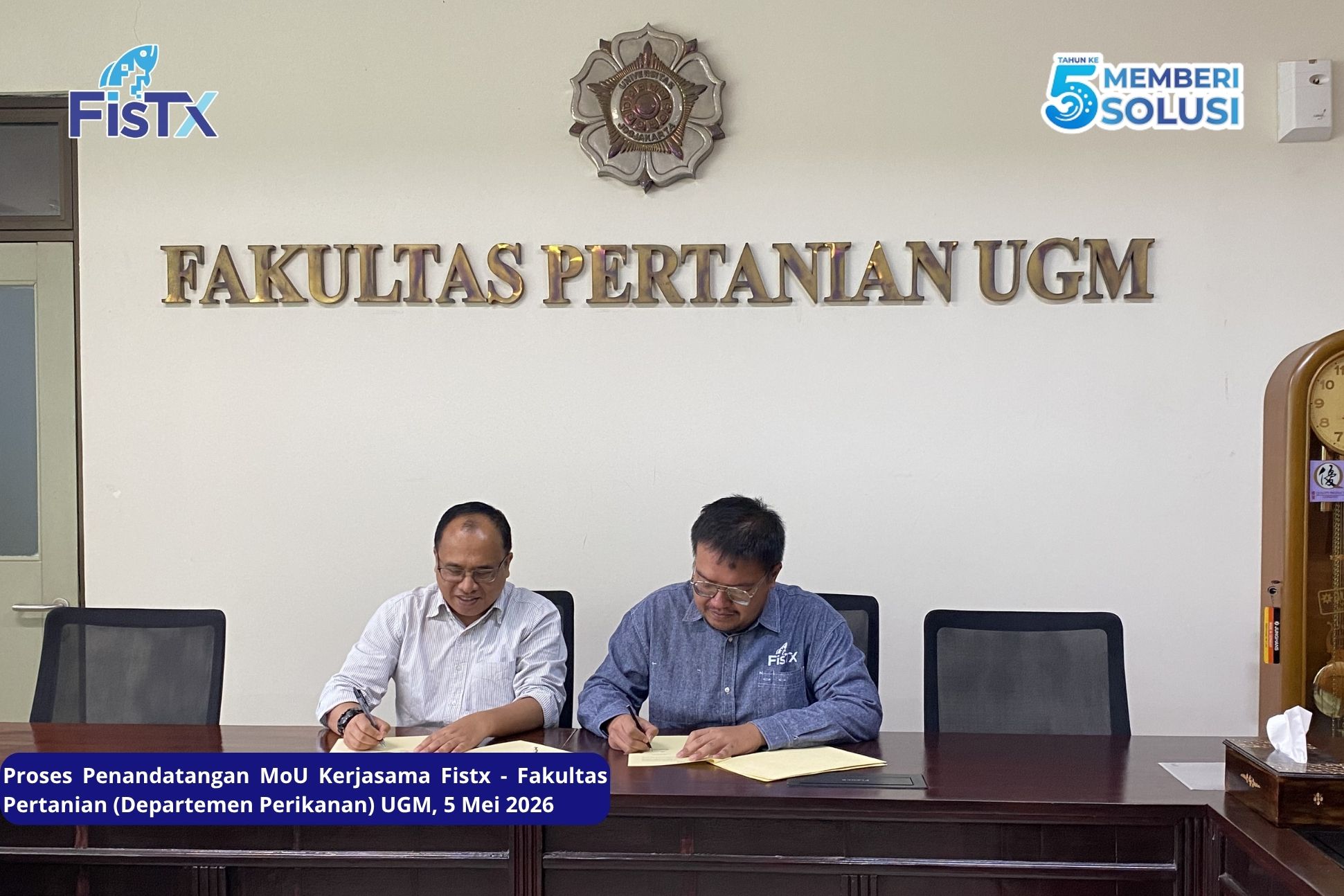
Collaboration in Research, Education, and Technology Implementation
This partnership encompasses three main pillars: education, research, and community service. In the education sector, FisTx is offering an Impactful Internship Programme for students from the UGM Department of Fisheries to gain direct involvement in industrial projects.
In the field of research, the collaboration focuses on joint research between the UGM Department of Fisheries and FisTx’s R&D division, including the implementation of technology in the university’s aquaculture ponds and the UGM Agrotechnology Innovation Centre (PIAT UGM) area. This approach enables the direct testing of technology under real-world conditions.
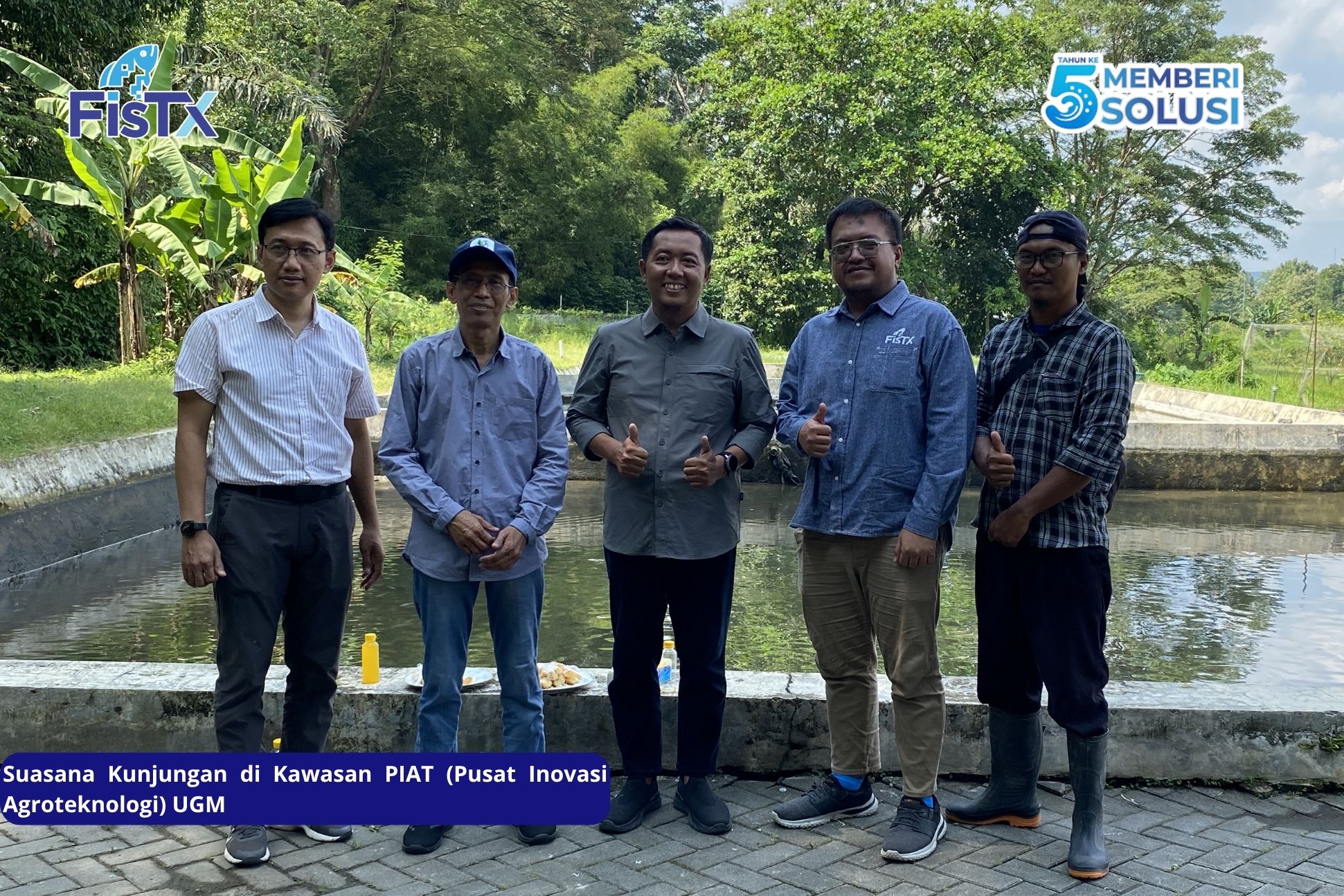
Driving Technological Innovation for Modern Aquaculture
Through this collaboration, both parties aim to develop research-based products and technologies supported by field data. The primary focus is on nanotechnology-based innovations as future solutions to boost aquaculture productivity whilst keeping costs affordable.
In its implementation, FisTx technologies such as Baskara UV, Cakra Electrolysis, Antasena Microbubble, and the Aqua Support range based on nanotechnology (Nano Silver & Nano Disinfectant) will be used as the primary platforms for testing and development.
“A research- and technology-based approach is key to modern aquaculture as it enables more accurate decision-making, improves production efficiency, and generates proven, measurable, and widely replicable solutions to support the industry’s sustainability,” said Rico Wisnu Wibisono.
Industry-Academia Synergy for Sustainable Innovation
This collaboration also underscores the importance of synergy between industry and academia in driving progress in the aquaculture sector.
“Collaboration between industry and academia is key to driving relevant and practical aquaculture innovation, by integrating the strengths of scientific research and field experience to produce proven, efficient solutions that have a direct impact on the national fisheries sector,” stated Prof. Dr. Ir. Alim Isnansetyo
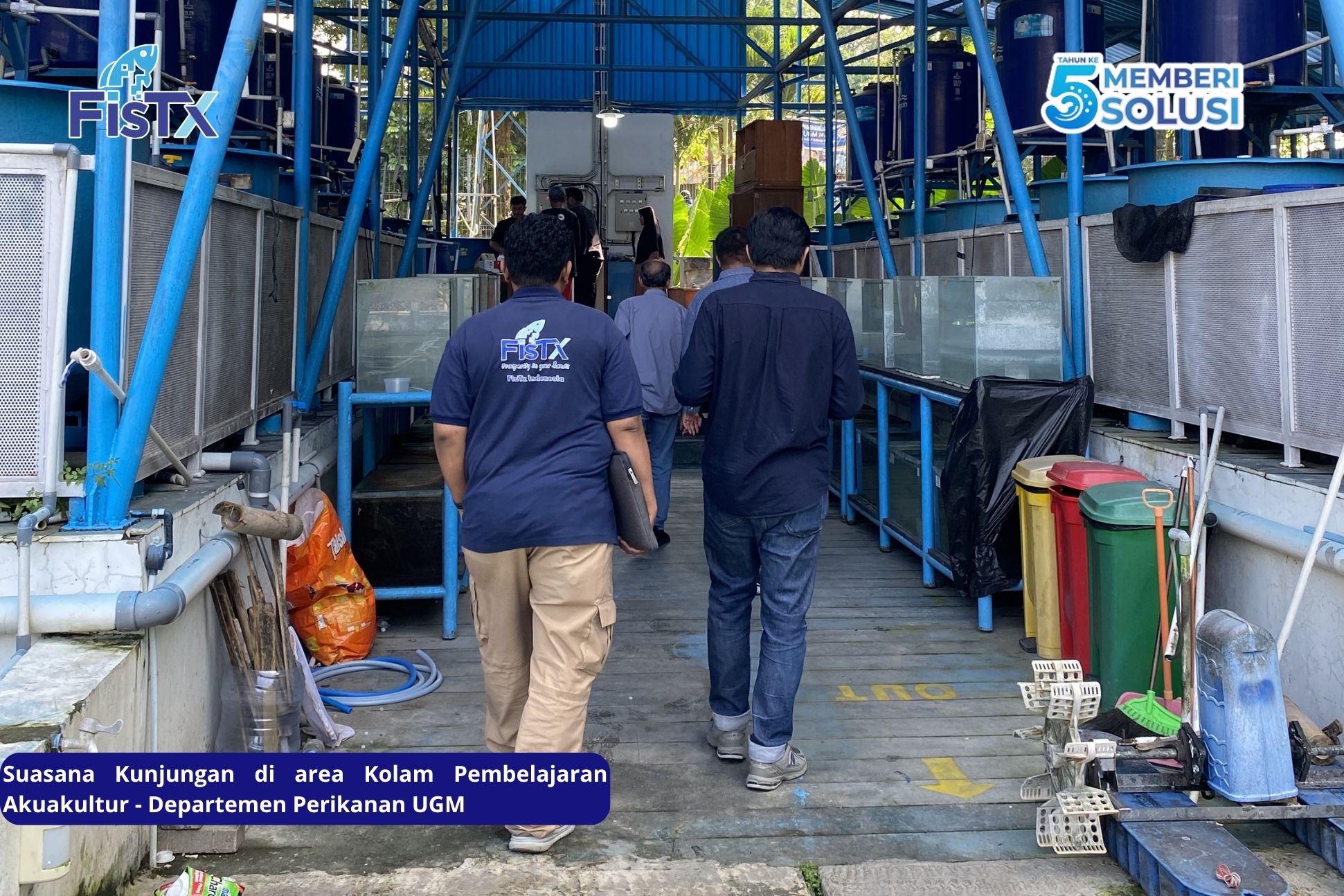
A Collaboration Model Based on Practical Implementation
This collaboration will be carried out through various implementation schemes, including:
Impactful internship programmes for students
Collaborative research based on field data
Pilot projects at fish farms as ‘living labs’
Seminars and workshops for knowledge transfer
Furthermore, both parties will jointly develop technology (co-development), ranging from prototype development to product refinement through data-driven iteration. This approach enables the acceleration of the transition from research to industrial implementation.
Tangible Impact for Aquaculture Farmers and the National Industry
This collaboration is expected to deliver direct benefits to aquaculture farmers through access to proven technology, increased productivity, and research-based mentoring. On the other hand, this collaboration also strengthens the national fisheries industry ecosystem by accelerating the emergence of practical and sustainable innovations.
By combining the strengths of academic research and industrial technology, FisTx and UGM are optimistic that this collaboration can serve as a model for modern aquaculture development in Indonesia, whilst contributing to supporting food security on the path to Indonesia Emas.