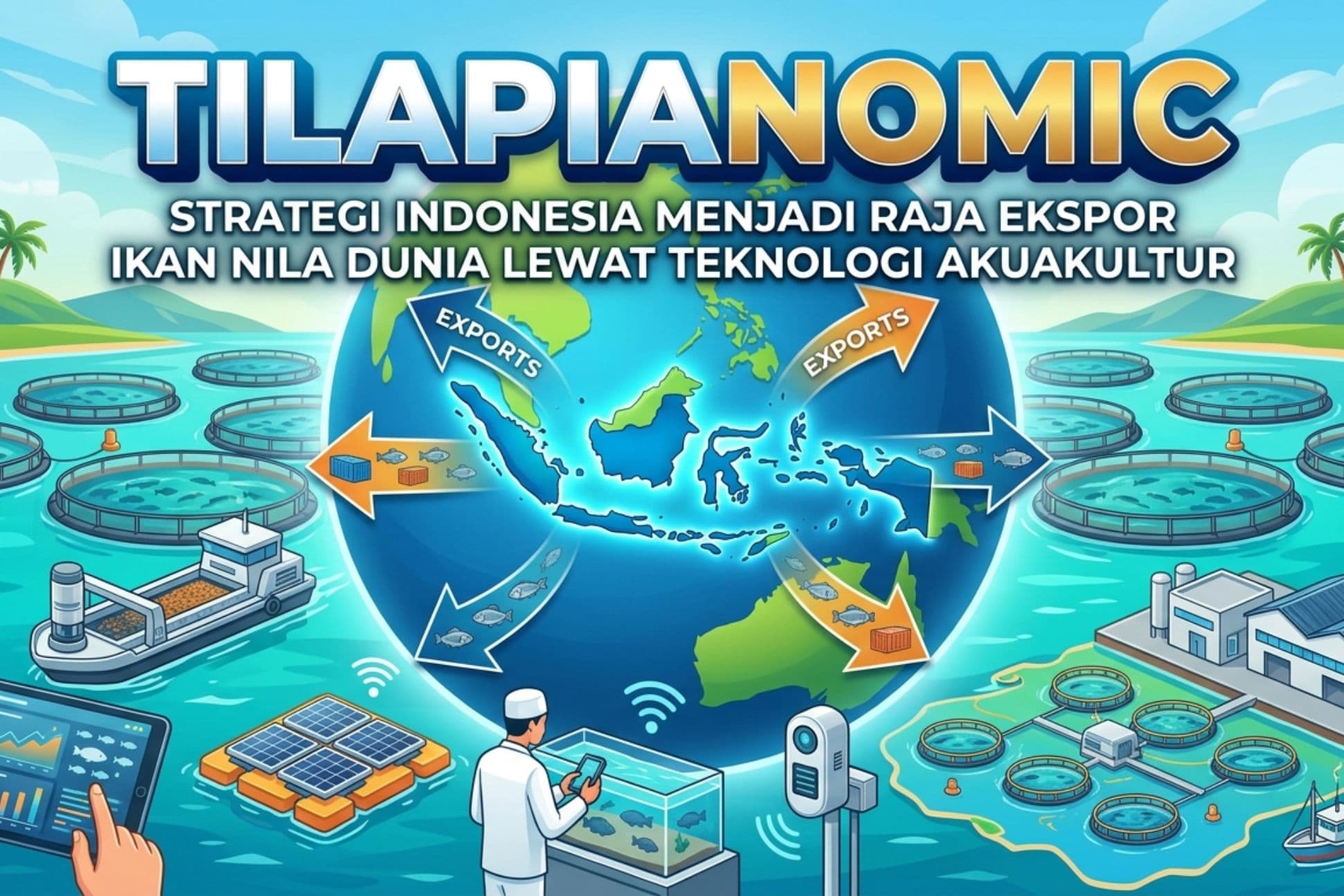
Tilapianomic: Indonesia’s Strategy to Become the World’s Leading Tilapia Exporter Through Aquaculture Technology
Indonesia possesses all the prerequisites to become a major global aquaculture power. The world’s second-longest coastline, vast aquaculture areas, a steadily rising national demand for protein, and a productive demographic dividend form a foundation that few other countries can match.
However, to this day, much of this potential has yet to be converted into an integrated economic advantage. Amidst fierce global competition and the growing need for sustainable protein, Indonesia requires a new growth engine capable of generating foreign exchange, strengthening food security, and creating equitable prosperity.
One of the most realistic solutions is Tilapianomic.
Tilapianomic is a tilapia-based economic development approach that integrates precision aquaculture technology, long-term investment, modern cooperatives, and the synchronisation of national policies to establish Indonesia as a dominant player in the global tilapia trade. For FisTx, Tilapianomic represents a strategic direction towards a more efficient, inclusive, and self-reliant future for Indonesia’s aquaculture sector.
Why is tilapia a strategic commodity for Indonesia?
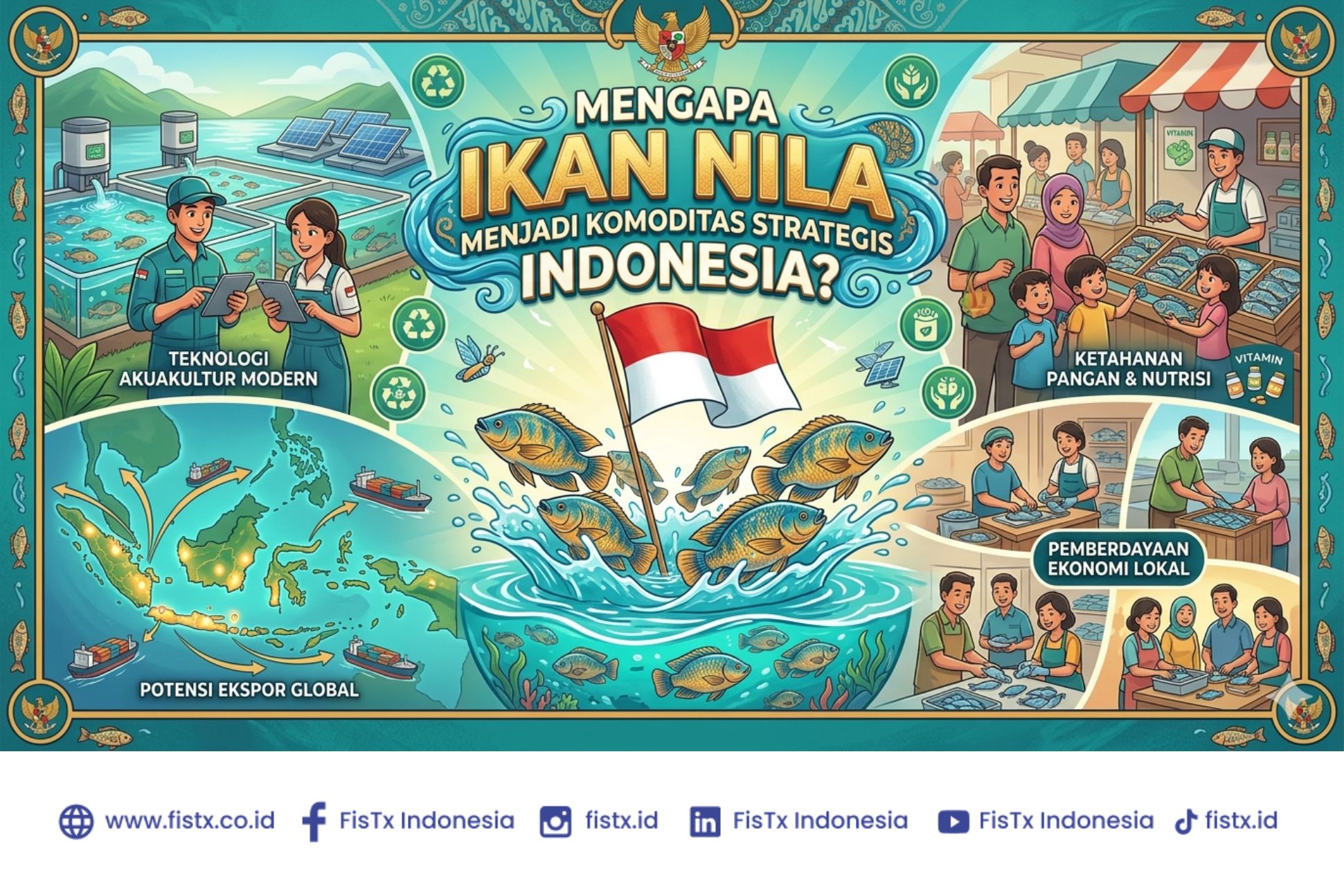
In the global aquaculture landscape, Nile tilapia (Oreochromis niloticus) possesses highly competitive biological and economic characteristics.
As a low-trophic-level species, tilapia requires more efficient production inputs than many other farmed commodities. It has high feed conversion efficiency, is tolerant of changes in water quality, and is relatively adaptable to various farming systems.
From a market perspective, Nile tilapia holds a strategic position as an alternative white-meat fish for the international market, which has traditionally relied on cod and haddock.
Global demand for premium Nile tilapia fillets continues to rise due to:
- firm flesh texture
- neutral flavour
- ease of processing
- acceptance in modern retail markets
- suitability for the global food service industry
In Indonesia itself, national tilapia production remains relatively stable at around 1.35–1.56 million tonnes per year, making it one of the country’s largest aquaculture commodities.
Domestic consumption is also strong, reaching approximately 4.9 kilograms per capita per year, making it a pillar of national protein security. Meanwhile, Indonesia’s tilapia exports are valued at USD 75–80 million per year, with the main markets being North America and the European Union. This demonstrates that tilapia possesses two strengths simultaneously :
domestic market stability & growth in export value added. This combination is rarely found in other commodities.
The Potential of ‘Idle Fish Ponds’ on the North Coast: A Forgotten Strategic Asset
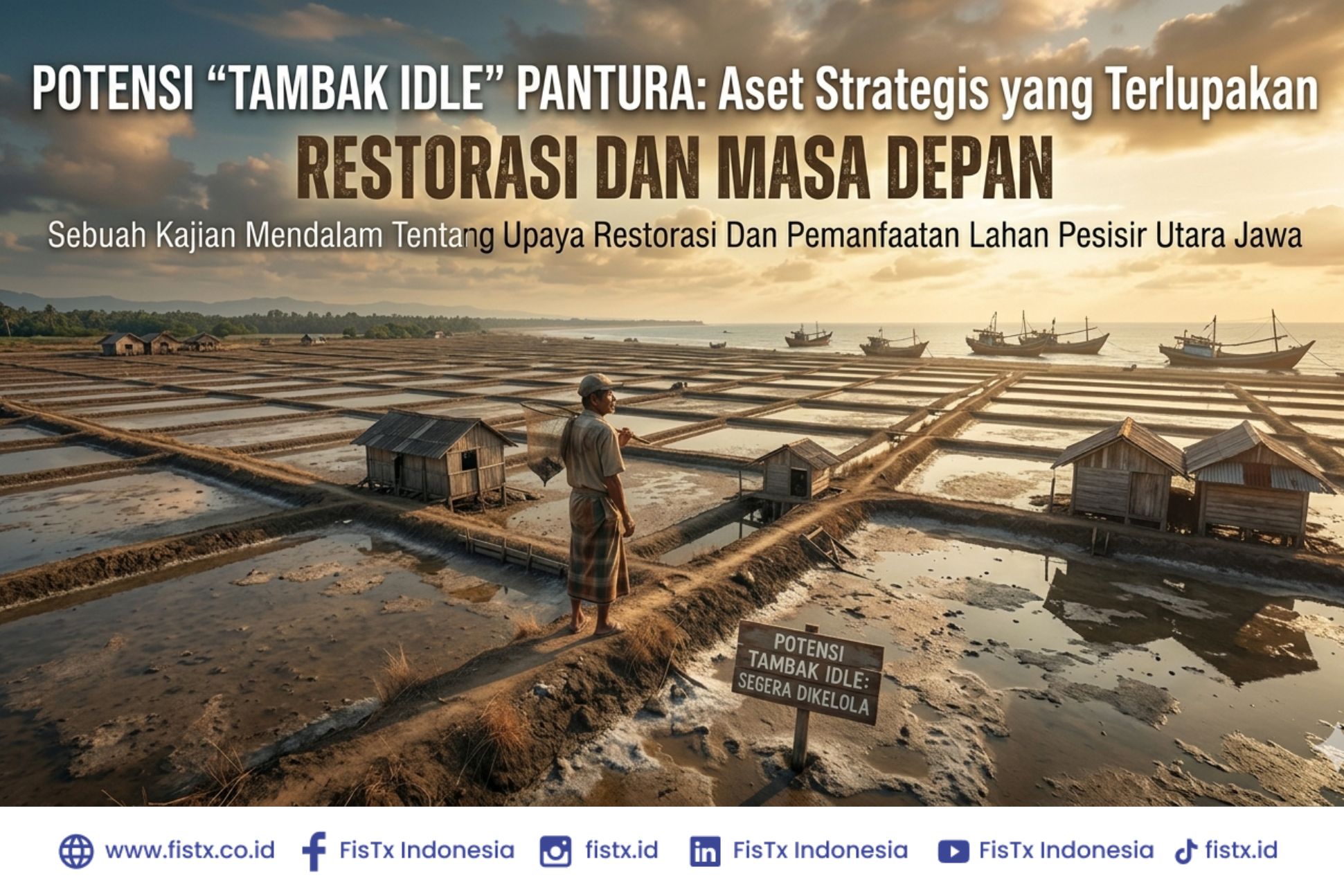
Indonesia has tens of thousands of hectares of idle fish ponds along the North Coast of Java that have not been utilised to their full potential. Most of these are former shrimp farming areas that have experienced a decline in productivity due to environmental degradation and high biological risks. However, with modern technological approaches, this area could be revitalised into a centre for intensive saltwater tilapia production.
Through the development of high-salinity-tolerant tilapia strains, these marginal lands can be transformed into new production centres without placing additional pressure on inland freshwater resources. If just 30% of the estimated 78,000 hectares of idle ponds could be reactivated, Indonesia has the potential to increase production by 450,000–600,000 tonnes per year. This would be sufficient to push national capacity beyond two million tonnes and reshape Indonesia’s position in the global supply chain. More than just a production expansion, this represents a strategic repositioning of Indonesia as a global aquaculture powerhouse.
Technology Is the Key Differentiator
Global dominance is no longer determined by land area alone. It is determined by biological efficiency and operational precision. This is where technology becomes the key differentiator. Through precision aquaculture solutions such as:
- Baskara UV for precision water sterilisation
- real-time water quality monitoring systems
- biological algorithm-based auto-feeders
- artificial intelligence-based aquaculture telemetry
- digital pond performance data systems
FisTx helps aquaculturists achieve efficiencies that were previously difficult to achieve manually. The impact is clear:
- Feed Conversion Ratio drops from 1.6 to 1.2
- survival rate rises above 85%
- operational costs are better controlled
- the risk of mass mortality decreases
- harvest quality is more consistent
Furthermore, the digitisation of aquaculture data opens up opportunities for formal financing through alternative credit scoring. This is the foundation of modern aquaculture industrialisation.
National Collaboration is Key
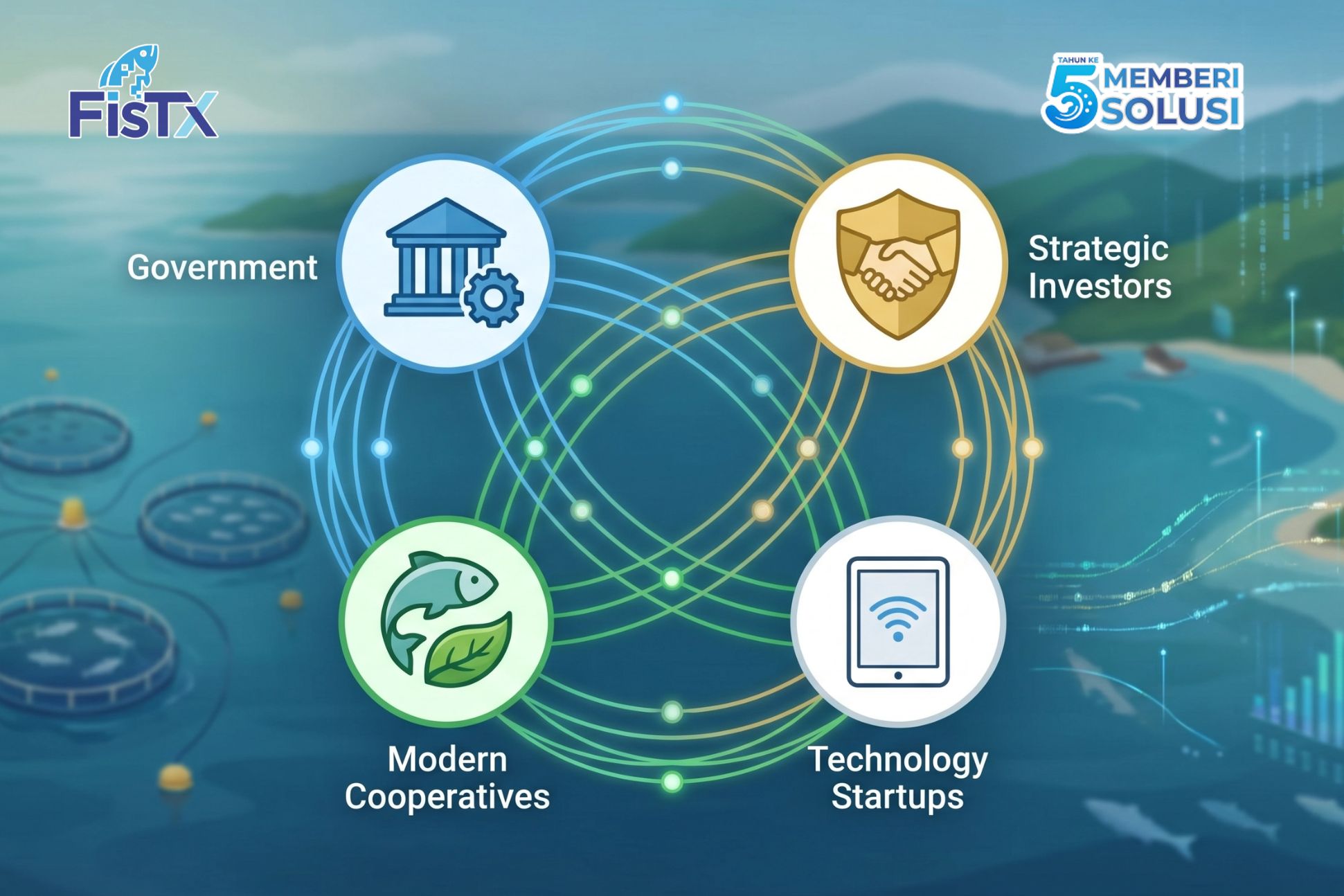
A transformation of this magnitude requires cross-sector coordination.
The most ideal model is the quadruple helix ecosystem, namely collaboration between:
- The government
through regulation, zoning, biosecurity, and the facilitation of export certification.
- Strategic investors
for the development of large-scale infrastructure such as hatcheries, cold-chain facilities, and fillet processing plants.
- Modern cooperatives
as aggregators for smallholder farmers to achieve competitive economies of scale.
- Technology start-ups such as FisTx
as accelerators of operational efficiency and innovation.
Without this integration, Indonesia will only produce volume.With this integration, Indonesia creates value.
Tilapianomic : The Path to Indonesian Aquaculture Sovereignty
For too long, Indonesia has relied on extractive commodities to bolster its foreign exchange reserves. It is time for new economic growth to emerge from a renewable, inclusive and sustainable biological sector. Tilapianomic offers a concrete blueprint for this.
It is not merely about producing more tilapia. It is a national strategy to:
- strengthen food security
- create coastal jobs
- enhance export competitiveness
- distribute prosperity more equitably
- build Indonesia’s aquaculture technological sovereignty
The future of national aquaculture is not determined by who owns the largest fish farm. It is determined by who is able to integrate technology, data, and collaboration into sustainable growth. And that future is being built today. Together with FisTx Indonesia.
Read More Articles
First Harvest of Silvofishery Programme in Dabong Village, Kubu Raya, Proves Success of Sustainable Aquaculture
14 January 2026
FISTX Presents at Sasarehan SCI Jabar-Banten: Innovation in Environmentally Friendly Shrimp Farming Technology
24 September 2024
Understand EHP Disease, Prevention and Treatment Methods
26 September 2024