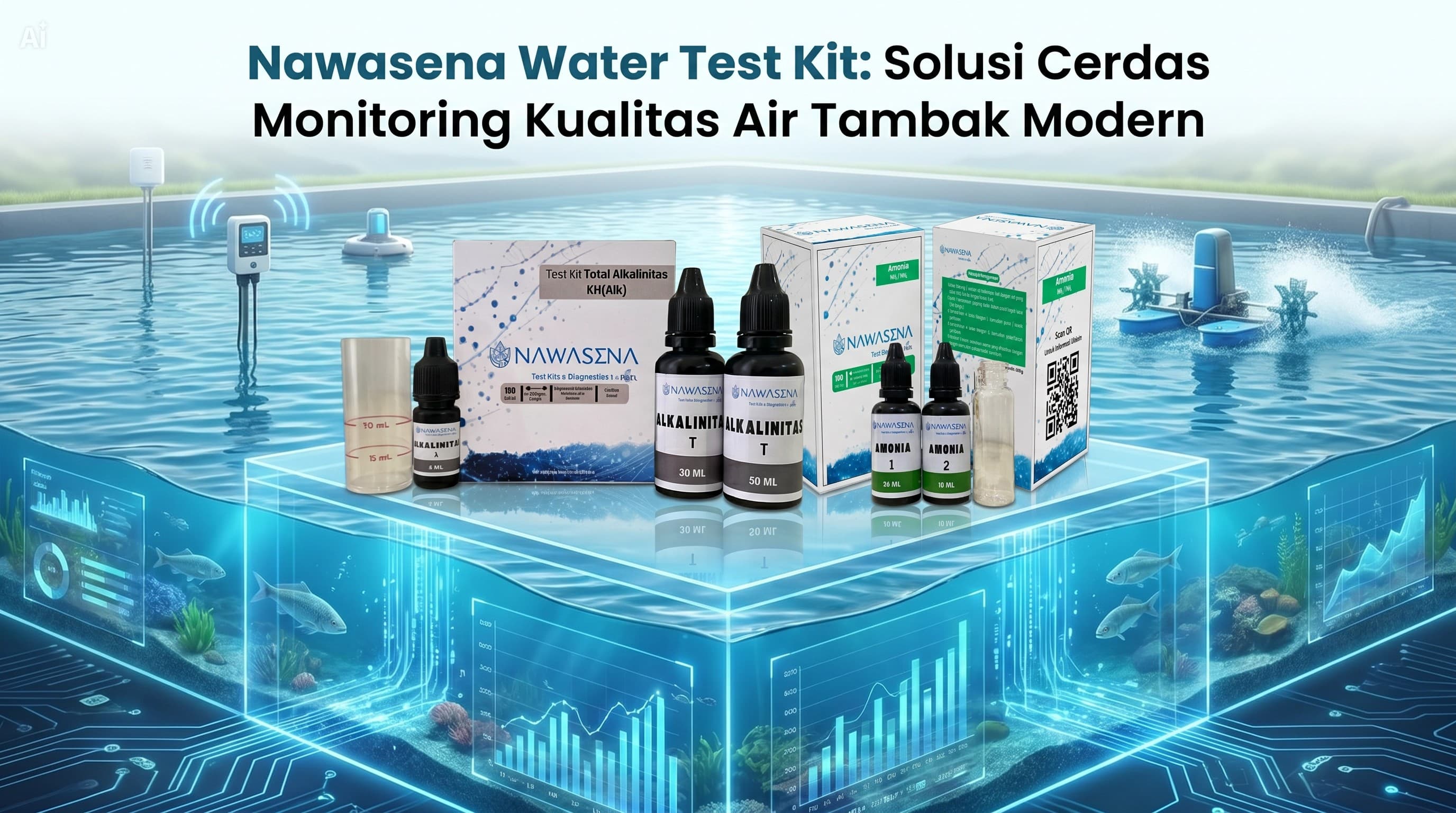
Nawasena Water Test Kit: A Smart Solution for Monitoring Water Quality in Modern Fish Ponds
Why Must Pond Water Quality Monitoring Be Data-Driven?
In modern shrimp farming, many crop failures are not caused by feed or the quality of the fry, but rather by pond water quality issues that go undetected at an early stage. Changes in parameters such as ammonia, pH and alkalinity can occur within a matter of hours without any clear visual signs.
This is why a gut-feel approach is no longer relevant. Shrimp farmers need a pond water quality monitoring system that is fast, practical and data-driven.
The Nawasena Water Test Kit offers a solution to help farmers carry out routine, real-time water quality testing directly in the field without having to wait for laboratory results.
What is the Nawasena Water Test Kit?
The Nawasena Water Test Kit is a water quality testing tool specifically designed to support the needs of intensive and semi-intensive shrimp farming.
This kit enables farmers to:
- Measure key parameters such as ammonia (NH₃) and alkalinity
- Obtain results quickly (1–2 minutes)
- Make decisions based on daily data
With this approach, pond water quality monitoring becomes more preventive rather than reactive.
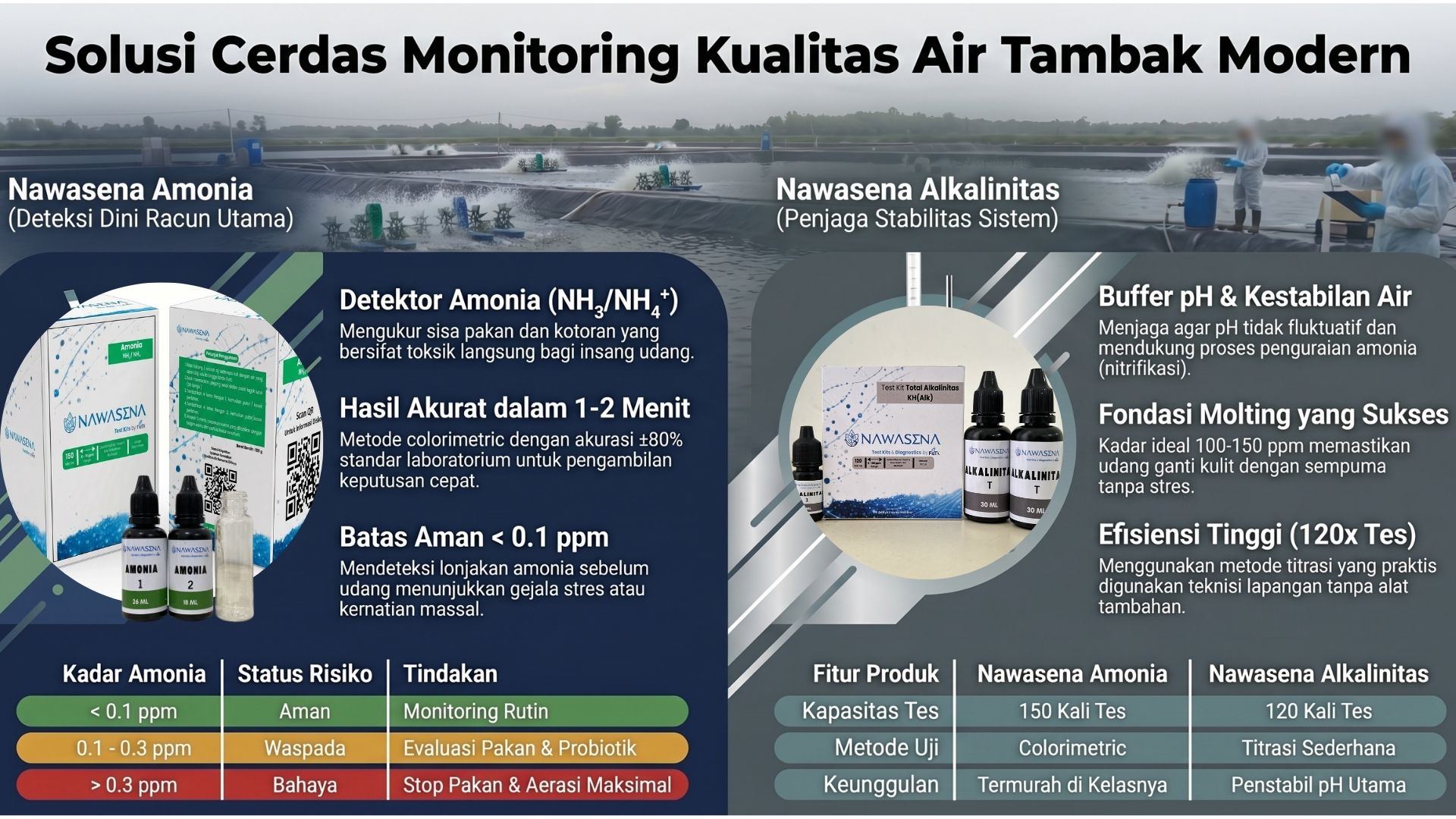
Nawasena Ammonia: Early Detection of the ‘Silent Killer’ in Shrimp Ponds
What is Ammonia in Shrimp Ponds?
Ammonia (NH₃) is a toxic compound that originates from:
- Uneaten feed
- Shrimp faeces
- The decomposition of organic matter
At high concentrations, ammonia can:
- Damage shrimp gills
- Reduce appetite
- Weaken the immune system
- Cause mass mortality
What is a Safe Ammonia Level?
The safe ammonia level in shrimp ponds is: 👉 < 0.1 ppm
Without an ammonia test kit, increases in this level often go undetected until they have already caused serious harm.
Solution: Nawasena Ammonia Test Kit
The Nawasena Ammonia Test Kit offers:
- Cost-effective: approx. Rp1,900 per test
- Accuracy up to 80%
- Rapid results for daily monitoring
Nawasena Total Alkalinity: The Key to pH Stability in Shrimp Ponds
What is Pond Alkalinity?
Pond alkalinity is the water’s capacity to resist changes in pH (buffer system). This parameter is vital for maintaining a stable aquaculture environment.
What is the Ideal Alkalinity for Shrimp?
For vanamei shrimp:
👉 100 – 150 ppm
If alkalinity is low, then:
pH becomes unstable
Shrimps become easily stressed
The nitrification process is disrupted
Ammonia is difficult to break down
Solution: Nawasena Total Alkalinity Test Kit
At a cost of just around Rp1,500 per test,
Nawasena Total Alkalinity helps:
- Maintain pH stability in the pond
- Support the pond’s biological system
- Optimise the waste breakdown process
Why Should Ammonia and Alkalinity Be Monitored Together?
Many farmers focus solely on ammonia without paying attention to alkalinity. This is a critical mistake in monitoring pond water quality.
The fact is:
- Low alkalinity → nitrifying bacteria do not function optimally
- Nitrification is disrupted → ammonia is not broken down
- Ammonia levels rise → shrimp become stressed and die
- This means that these two parameters have a symbiotic relationship within the pond ecosystem.
By using the Nawasena Water Test Kit, farmers can ensure that the biological system is functioning optimally.
The Benefits of the Nawasena Water Test Kit for Modern Aquaculturists
Compared to conventional methods or laboratory tests, Nawasena offers:
- Fast → results in 1–2 minutes
- Convenient → no electricity or additional equipment required
- Accurate → precise enough for daily operations
- User-friendly → easy for field technicians to use
These benefits make Nawasena the leading solution for data-driven aquaculture water quality monitoring systems.
FAQ (AEO & Featured Snippet Optimisation)
1. What is the purpose of a pond water test kit?
A water test kit is used to measure water quality parameters such as ammonia and alkalinity to ensure the pond remains in optimal condition.
2. What is a safe ammonia level for shrimp?
A safe ammonia level is below 0.1 ppm.
3. What is the ideal alkalinity for a shrimp pond?
Ideally, it should be in the range of 100–150 ppm.
4. How often should pond water quality be checked?
At least once a day, and more frequently when conditions are unstable.
5. Can a test kit replace laboratory testing?
For daily monitoring, a test kit is sufficient. Laboratory testing is used for further analysis.
From Gut Feeling to Data-Driven Farming
In the modern aquaculture industry, success is no longer determined by experience alone, but by accurate, real-time data. The Nawasena Water Test Kit helps farmers transition from a reactive to a preventive approach through consistent and measurable monitoring of pond water quality.
👉 Contact the FisTx Expert Team for a consultation on your pond water quality via WhatsApp: 6282323545511