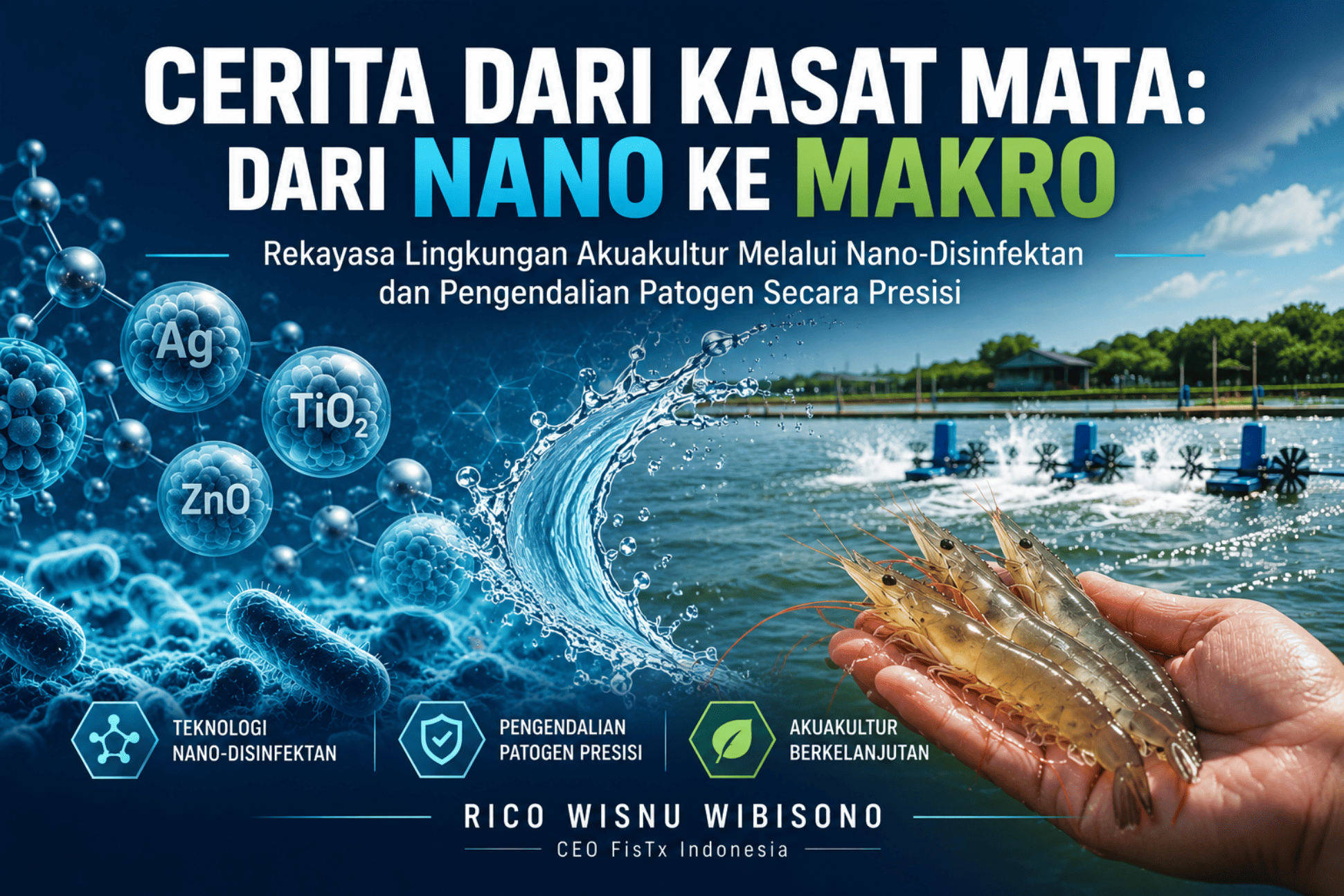
Mass Shrimp Die-offs Are Not Fate: A Story from an Invisible Scale
Pond water suddenly turning murky, aerator paddles coated in biofilm, followed by a mass die-off of shrimp at just 20 days old—this is a scenario all too familiar to *Vannamei* shrimp farmers in Indonesia. The culprit is often the same: a population explosion of *Vibrio parahaemolyticus*, while conventional disinfectants like chlorine and formalin fail to penetrate the biofilm and instead trigger increasingly hard-to-control antimicrobial resistance (AMR).
The answer lies at a scale invisible to the naked eye: the nanometer.
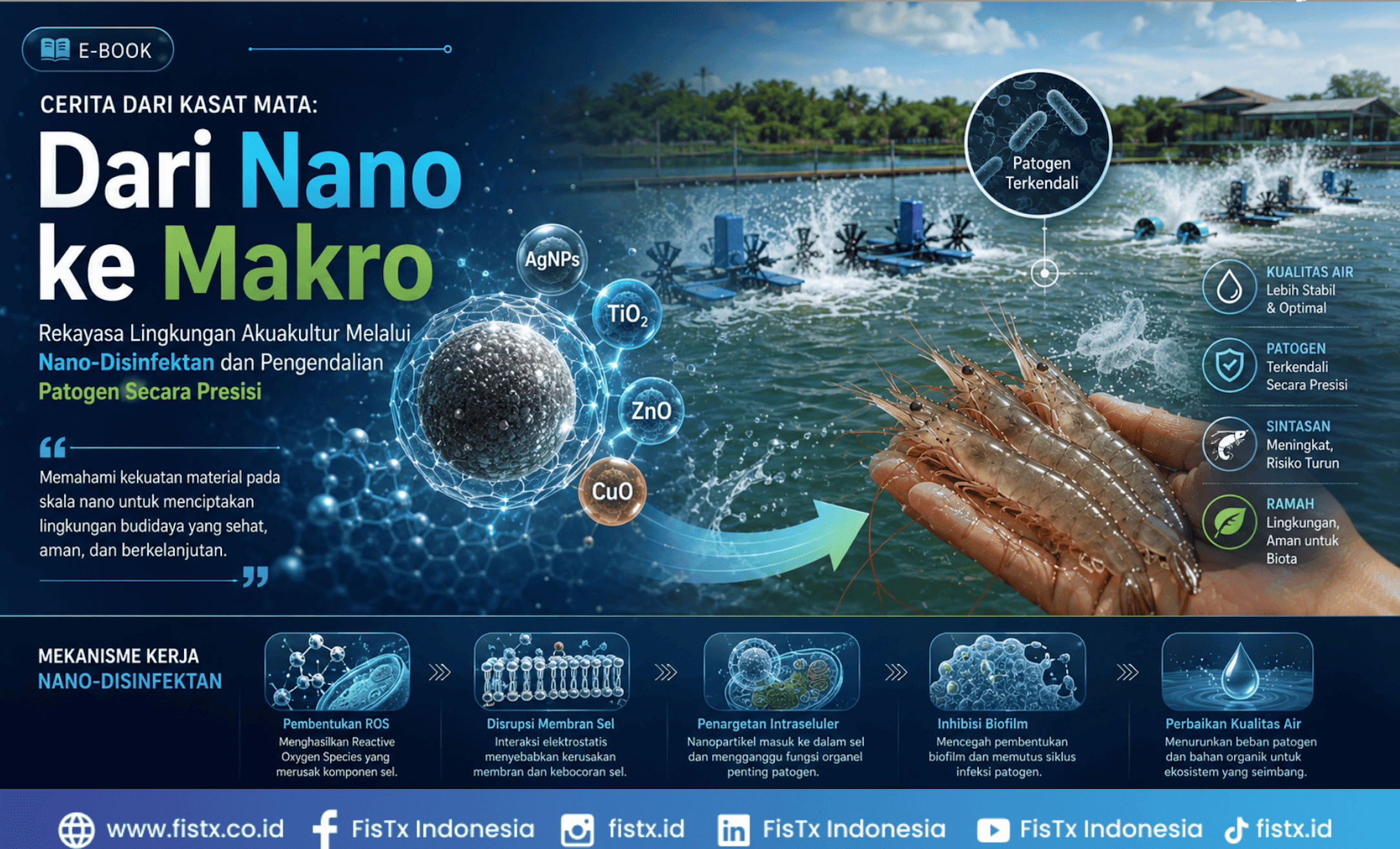
Nano-disinfectants—such as AgNPs, TiO2-NPs, and chitosan nanoparticles—operate very differently from standard disinfectants. Rather than targeting a single pathway, these particles (sized 1–100 nm) attack pathogens simultaneously: disrupting cell membranes, inducing oxidative stress via reactive oxygen species (ROS), and penetrating the biofilm matrix that typically resists chlorine. The result? Up to 99.9% pathogen elimination, with no toxic residues that could harm the shrimp or the pond environment.
However, it is a double-edged sword; precise dosage is key. Too low, and it is ineffective; too high, and it becomes toxic to the shrimp themselves. This is where science meets precision engineering.
The e-book "Stories from the Nanoscale: From Nano to Macro" provides an in-depth analysis of these mechanisms—complete with toxicity data, a comparison between nano-disinfectants and conventional ones, and real-world case studies of farms that successfully boosted shrimp survival rates to over 85%.
Want to know how nano-engineering can save your harvest?
Read More Articles
Production Cost Efficiency: Shrimp Pond Water Sterilization Strategies for Maximum Profit
05 March 2025
Nano Particle Technology Disinfectant for Shrimp, More Effective and Safe in Combating Diseases
26 September 2023
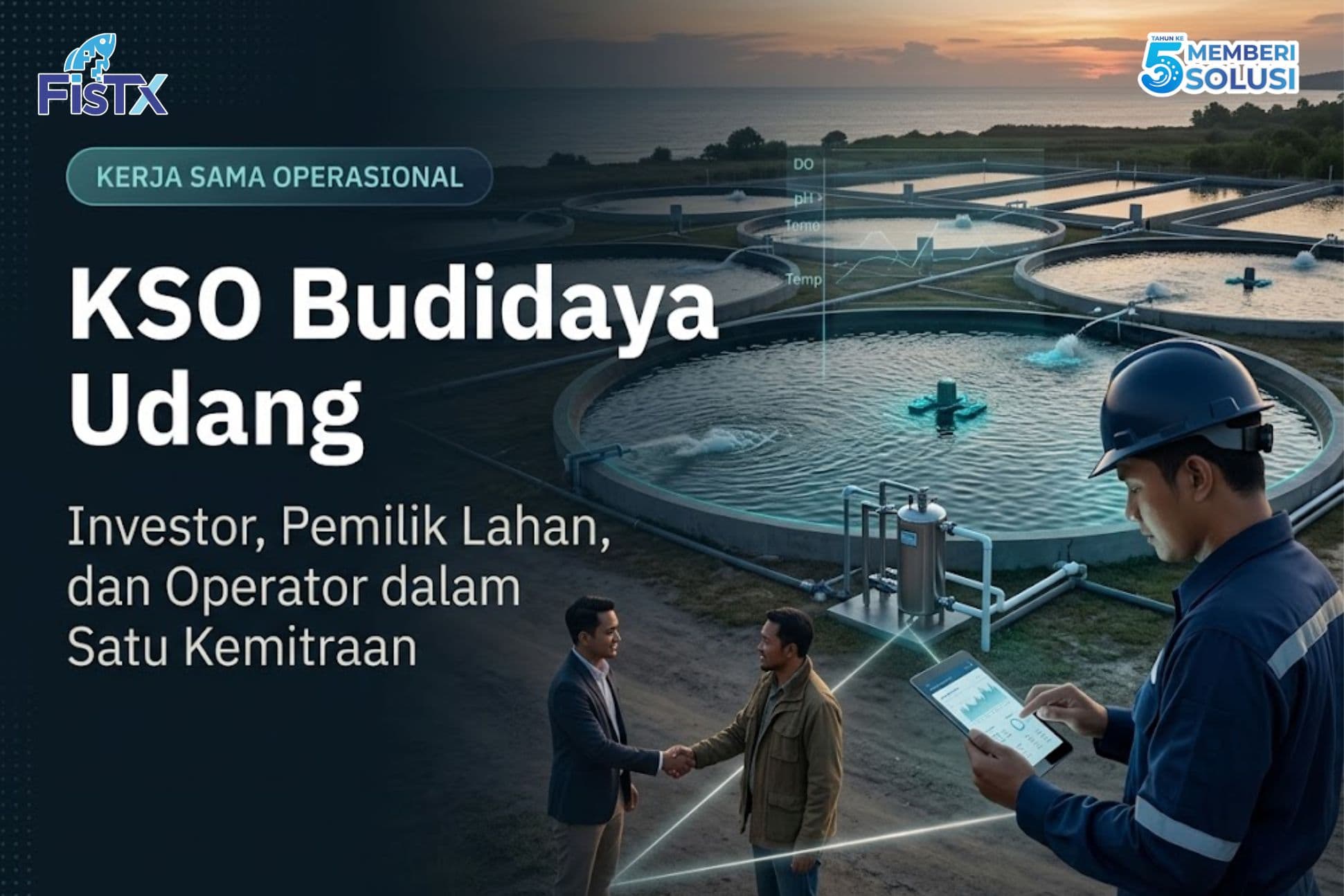
FIstx Shrimp Farming Joint Operation (KSO): A Collaborative Solution for Investors, Landowners, and Farm Operators
16 October 2026