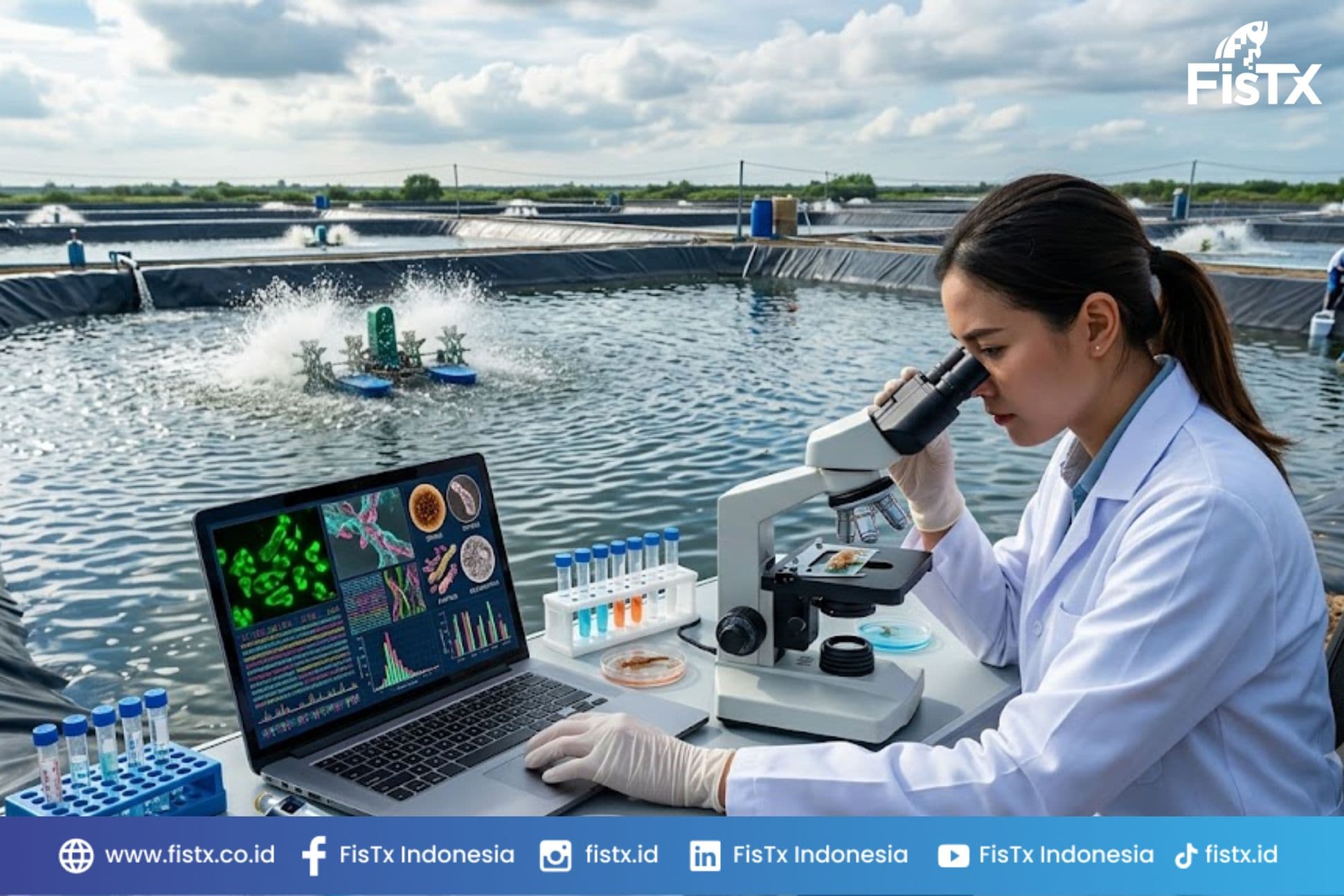
Cracking the Pathogen Code: A Scientific Approach to Tackling EHP, AHPND, and WFD in Shrimp Farms
Cracking the Pathogen Code: A Scientific Approach to Tackling EHP, AHPND, and WFD in Shrimp Farms
By: Rico Wibisono — Geneticist, Bioinformatician, and CEO of FisTx
I spend my time in two vastly different settings: in front of a screen analyzing genomic data, and out on the pond banks in muddy boots. It is from these dual perspectives that I view today’s shrimp disease crisis.
EHP, AHPND, and White Feces Disease (WFD) are not merely "seasonal disease outbreaks" that come and go. They are systems operating via precise biological mechanisms; if we understand how they function at the molecular level, we stand a far better chance of controlling them.
Three Diseases, One Chain of Attack
EHP: The Invisible Energy Thief
*Enterocytozoon hepatopenaei* (EHP) is a microsporidian parasite with a remarkably simple genome—simpler even than that of most bacteria. It has intentionally shed its own energy-producing genes because it has a singular goal: to steal energy directly from the shrimp's cells.
Using specialized transporter proteins, EHP siphons ATP—the cell's fuel—directly from the shrimp's hepatopancreas (HP) cells. Infected shrimp do not die immediately; they simply stop growing. Feed consumption continues, yet conversion into body mass stalls. This is why losses caused by EHP often go unnoticed until harvest time, when yields fall far short of targets.
AHPND: It’s Not About the *Vibrio*, It’s About the Plasmid
AHPND (Acute Hepatopancreatic Necrosis Disease) is often referred to as a *Vibrio* disease. While not incorrect, that description is not entirely precise. The true danger lies not in the bacterium itself, but in a circular DNA fragment known as the pVA1 plasmid, carried by certain *Vibrio* strains.
This plasmid encodes two toxins: PirA and PirB. They function like the two components of a bomb—one seeks out the target, while the other triggers the explosion. PirA attaches to receptors on the surface of the shrimp host cell, while PirB punctures the cell membrane from within. Damage occurs very rapidly.
What complicates matters further is that the pVA1 plasmid transfers easily between *Vibrio* species through a process known as horizontal gene transfer. This means the killing capability can "spread" from one bacterium to another—even across different species.
WFD: A Symptom, Not the Root Cause
This is where many farmers miss the mark. White Feces Disease (WFD)—manifested as white feces floating on the pond surface—is often treated as the primary problem. In reality, it is the final outcome of a chain of damage that has already occurred.
Here is the sequence: EHP weakens hepatopancreas (HP) cells by depleting their energy. In this weakened state, AHPND toxins act far more effectively than usual. The microvilli (fine, hair-like structures) on the intestinal wall become damaged, slough off, and clump together, forming a mass known as Aggregated Transformed Microvilli (ATM). It is this mass that appears as white feces.
By the time WFD becomes visible, the damage within the HP is already severe. Treatment focused solely on visual symptoms will not suffice.
A Defensive Approach: From the Outside In
Understanding how these pathogens operate paves the way for more targeted strategies. The most effective approach works on two fronts simultaneously: clearing pathogens from the aquatic environment (external defense) and protecting the shrimp's digestive organs from within (internal defense).
External Defense: Electrochemical Water Oxidation
One of the technologies developed by FisTx is a pond water electrolysis system. It works by passing brackish water through a specialized electrode reactor. The electrolysis process breaks down chloride ions present in the water into active oxidizing compounds—primarily hypochlorous acid (HClO) and hydroxyl radicals (OH•).
Hydroxyl radicals are the most powerful oxidizers that can be naturally generated, boasting a redox potential of approximately 2.80 V. These compounds are capable of damaging EHP spore walls, breaking the pVA1 plasmid chains floating in the water, and significantly suppressing *Vibrio* populations—all without the need for external chemical additives, as the process relies solely on the water and salt already present in the pond.
This differs fundamentally from conventional calcium hypochlorite (chlorine) approaches. Calcium hypochlorite involves administering external chemicals that degrade within hours, whereas electrolysis continuously generates active oxidants using the pond water itself as the raw material.
Internal Defense: Nanoscale Copper Ions
To protect the shrimp's hepatopancreas (HP) from within, FisTx employs nano-copper (N-Cu) technology—copper ions reduced to a scale of less than 100 nanometers and incorporated into the feed.
Copper ions (Cu²⁺) have long been known to be toxic to pathogen DNA replication systems. The challenge, however, is that copper in standard forms is toxic to shrimp when used in quantities sufficient to effectively combat pathogens.
Nano-technology resolves this dilemma. Due to their minute size, N-Cu particles can penetrate the intestinal mucus layer and reach the areas where EHP spores or *Vibrio* cells are active—all while using much lower concentrations. At these sites, the locally released Cu²⁺ ions disrupt pathogen DNA replication: the pVA1 plasmid cannot replicate, and EHP cannot produce the proteins required to hijack cellular energy.
Field Strategy: Prevention vs. Treatment
In the field, these two technologies are applied differently depending on pond conditions:
For prevention: The electrolysis system operates routinely within the water circulation lines to keep the *Vibrio* population below 1,000 CFU/mL. Nano-copper is administered via feed 2–3 times a week at low doses to protect the digestive mucosa.
When WFD is detected: The electrolysis reactor current is increased for "shock-oxidation" mode—destroying free-floating spore masses and waste matter shed into the water. The nano-copper dosage in the feed is increased for 5–7 consecutive days. Simultaneously, feed volume is reduced by up to 50%; shrimp with damaged HP do not require large amounts of feed, and uneaten feed settling at the bottom only adds to the organic load of an already compromised pond.
Why This Matters
The targets we pursue at FisTx remain constant: an FCR of 1.2 and a survival rate exceeding 85%, even in locations where disease is endemic. Those figures can only be achieved if we stop treating symptoms and start targeting the underlying mechanisms. WFD is not our enemy—it is merely a sign that the true enemies (EHP and AHPND) have already been at work.
Modern aquaculture requires an approach that is scientific, measurable, and replicable across different farms—not one that relies on "waiting for the disease season to end."
Read More Articles
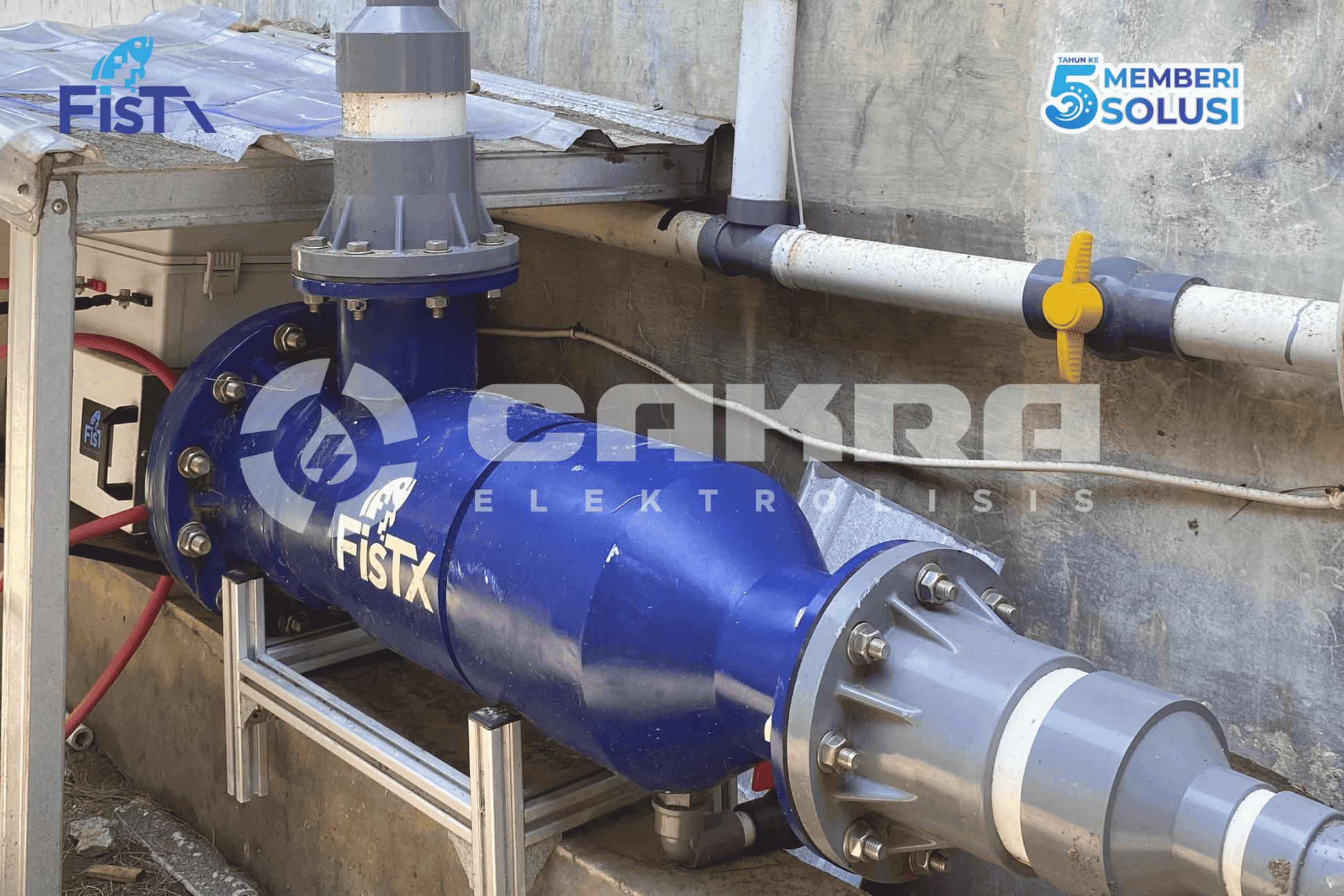
Cakra Elektrolisis : Innovation in Pond Water Sterilisation to Improve the Quality of Indonesian Shrimp Farming
18 December 2025
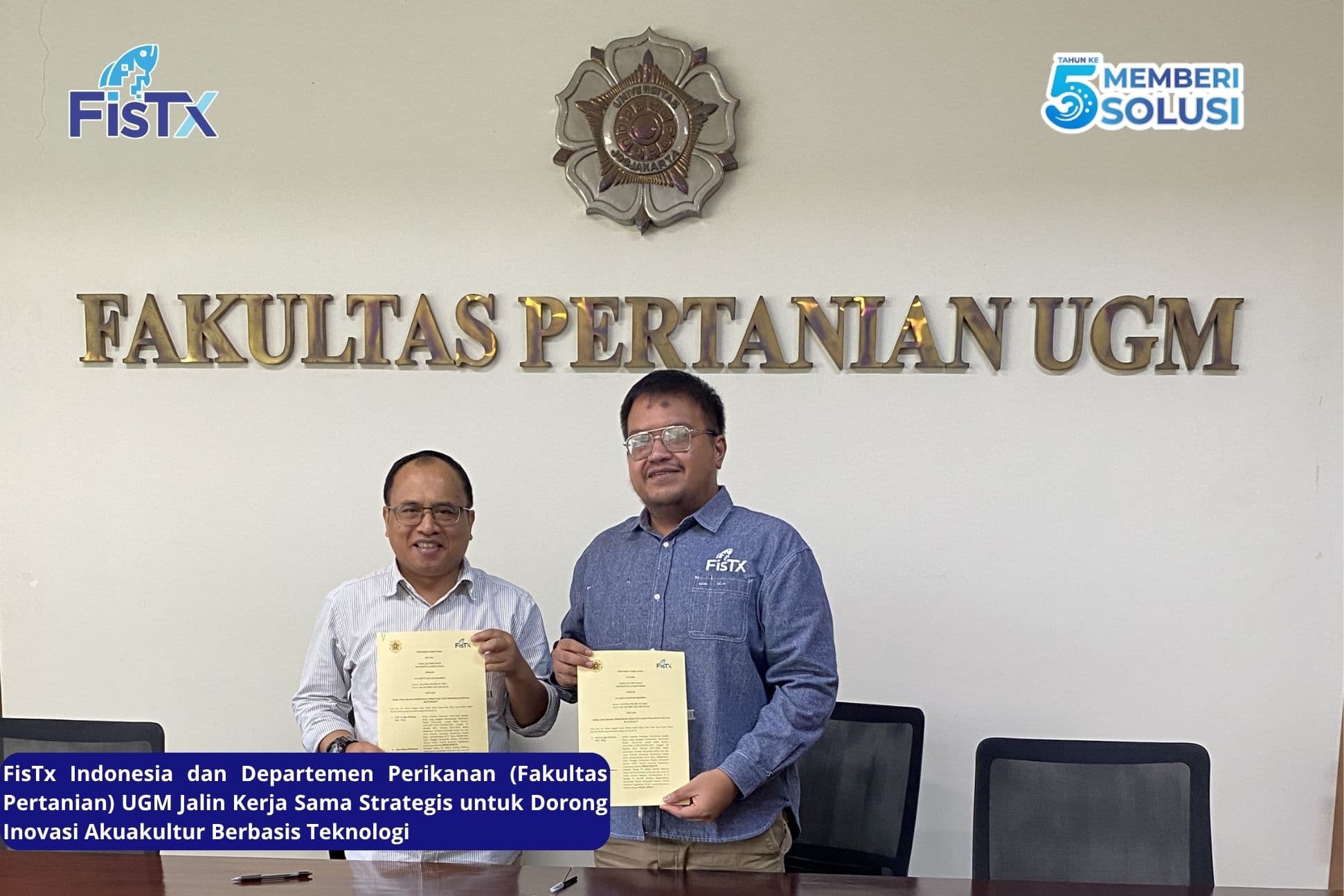
FisTx Indonesia and the Department of Fisheries (Faculty of Agriculture) at UGM have entered into a strategic partnership to promote technology-based aquaculture innovation
06 May 2026

Understanding the Influence of Ammonia in Shrimp Cultivation
26 July 2023